Wednesday, February 13, 2008

Radio: Daze of Decision?

Isn’t it hard to believe that no one at BainCapital and Thomas H. Lee perceive Clear Channel as a sinking garbage scow?

It’s even harder to believe that Citigroup, the Royal Bank of Scotland, Deutsche Bank, Credit Suisse and Morgan Stanley – the five banks backing this deal of doom - are still passengers on this ship of fools.
*
This one’ll get interesting. Usually, in a buyout like this, employees unvoluntarily leave in droves. But what happens when you've already terminated the bulk of your employees?

Clear Channel never learns from their mistakes. They don’t have to. They just pass the blame on to their dwindling work staff. Another mistake at the top equals another round of cuts below.

And please – have some respect. Don’t ask the Mays family to relinquish the leases to their private jets. Yes, plural.

Bear Sterns trotted out analyst Victor Miller to do an optimistic spin on the deal by claiming that with FCC’s rubber stamp approval out of the way, Bain/Lee-Clear Channel will be as good as a done when Department of Justice weighs in – and he expects them to do so this morning.

This is no prognostication. Today is the deadline for DOJ to decide on the matter. It’s not like they have a choice.

Here’s how it works. If the DOJ does nothing, Bain/Lee and Clear Channel clear another regulatory hurdle. A hold-up will occur only if the DOJ files suit to block the buyout.

Miller’s hyperbole gave Clear Channel a momentary inflated taste of what it’s like to be in the low 30’s again – but by day’s end reality reared its ugly head and the stock price was 29.54. That’s only a ten and change higher than what it should really be.

At least we learned how much Miller’s support of Clear Channel is worth on Wall Street. Very little.

As this soap opera unfolds, the remaining hurdle will be whether or not the deal goes down at all.
*
Clear Channel’s propaganda claims it’ll be done by mid-March. It could also be un-done by then.

The end result – whether it happens or not – will be the same. Devaluation.

Just like first-time homeowners were seduced by the scam of subprime mortgages and other financing schemes, where fast money was made by flipping houses or signing off on predatory loans, major chains that bought into the "own everything" concept lost sight of pragmatic multiples in their effort to control media.

Clear Channel assumed they could do it through radio - including charging for airplay and dominating the concert business. Outdoor added value. Then they ended up believing their own hype.

Price was not an issue and multiples were ignored as Clear Channel sold shareholders on a future of media control through an interesting combination of reality, rationalization and levity as if the radio business was immune to station prices that had no basis in reality.

The steep rise in radio’s debt service created room for rival media to compete directly with radio. It had neither the budget nor a large enough talent pool to fight back.

Inflation and production costs had nothing to do with it.
*
I had to laugh at the radio industry’s retort to Jim Cramer’s comments about it on CNBC last Friday.

Now let’s stop here for a moment. I’m not defending Cramer. I like his brazen on-air persona. He’s a talented entertainer. But I won’t tell you that following his lead will make you wealthier or that he has all the answers to the mysteries of life.

Back to the show. The most-repeated line by Cramer was, “Radio’s finished – as we know it!” How many times did you read that quote on Monday?

Radio spin doctors were arranging, rearranging, and interpreting Cramer’s comments to mean something completely different.
*
One radio exec who’s still sipping the Kool Aid told me that, like Bob Dylan, one really has to study Cramer’s comments. He agreed with Cramer that “Radio’s finished” – but cautioned that “-as we know it” proved that he was talking about radio the way it was – not the way it’s going to be.”

Huh?

Did anyone catch what Cramer said next? “…but it doesn’t seem to matter to people in radio. They have always talked a big game and they’ll continue to talk a big game.”

Even less was more.

Another radio person played the conspiracy theory, claiming Cramer was a shill for XM Satellite Radio, which “just happened to run” a spot in the program.

I deliberately didn’t comment on Cramer. The over-reaction from the radio industry was just too good to top.

Here’s Clear Channel CEO and tarnished golden boy Mark Mays: “We’re not in the radio business. We look at ourselves as being in the cash flow business.”

Cramer: “…when you decide that all that matters is cash flow and the cash flow starts going down – you don’t have anything.”

He’s right. Radio – as we know it – is finished.

Did you hear? Clear Channel and a couple of other operators are taking a few of their unprofitable stations dark.

When everyone’s selling and no one’s buying – and you need whatever it is off your books – you drop the price.

Or as Bob Dylan put it – and you don't have to read between the lines to understand this one - “When you ain’t got nothin’/ you got nothin’ to lose.”

Let the haggling begin.
-----

Just in case you missed it. Here’s Cramer on radio: http://www.thestreet.com/video/10402694/cramer-its-over-for-radio-stocks.html#10402694

Thursday, February 7, 2008

Radio: CBS Translation - Cut Budgets Severely

We interrupt our regularly-scheduled blog for this bulletin chock-full of facts, conjecture and unsubstantiated opinions.

On Tuesday, Emmis Communications eliminated 46 jobs at their stations in New York, Los Angeles, Chicago, St. Louis, and Austin. It averaged out to a hair more than four and half percent of their total work force.

Here’s their explanation for the cuts: "Like many of our industry peers, Emmis took these steps as an expense reduction effort and to better position the company. "

Translation: They did it so we’re doing it, too.

Today, it was CBS Radio’s turn to terminate.

The death toll is inconclusive as of this moment - but it appears to have hit a variety of positions including market managers, program directors, sales managers, and webmasters. Slaughterhouse markets include New York, Chicago, Philadelphia, and Dallas.
*
Some learned their jobs were history when their CBS-issued Blackberries were shut off and its contents deleted.

And what did CBS have to say about the cuts?

We continue to build on our strategy of deploying our assets to best grow our ratings and monetize the results.

Translation: We still haven’t figured out what we’re doing but we believe we are getting closer to doing so.

In the past months, CBS Radio has streamlined its corporate management staff, and installed market managers and directors of sales in all of our markets.
*
“Streamlined” is the new “downsizing.”

The change in operating structure has improved the way we do business by simplifying buying and selling transactions, speeding up the decision making process, and importantly - allowing us to more effectively monetize the aggregate number of listeners who hear us on the radio and the Internet.

Employees get in the way.

CBS Radio also made significant programming improvements and considerably strengthened our digital assets, in order to distribute our content on all available emerging platforms.

We believe our own hype.

As a result of our new focus, we've experienced substantial over-the-air ratings gains and sizable online-traffic growth.

We try to believe our own hype.

We believe the combination of a new senior management team, continued emphasis on strategic programming decisions, investments in interactive new media and continued attention to costs will best position CBS Radio for success in 2008 and beyond.

We really try…

Off the record….want to buy a cluster of stations? Medium market?

Wednesday, February 6, 2008

Radio: Prior Control


It’s Boy Kevin Martin’s FCC so it’s naïve for one to believe that he would abide by existing rules governing prior control.

Correct me if I’m wrong.

Wasn’t it illegal for BainCapital and Thomas H. Lee to seize operational direction at Clear Channel?

A couple of weeks back the FCC rubber stamped the $27.4 billion buyout by Bain/Lee.

But I don’t recollect any FCC-approved lease marketing arrangement covenant allowing the two private equity firms prior control of Clear Channel operations. Do you?

Bain/Lee sent a team from Boston to San Antonio to make some sense of the morass at Clear Channel world headquarters. Their visit would’ve stayed under the radar had it not been for Matthew Karnitschnig’s Wall Street Journal blog leak.

“Waves of panic” were the words Karnitschnig used to describe Bain and Lee’s fear that their Clear Channel deal was dying.

They were dispatched to “to help run the business,” Karnitschnig added.

It’s not uncommon for private equity firms to send it their troops to shore up a company for privatization. Cerberus did with United Rentals in their last-ditch attempt to save that deal.

But the Clear Channel deal is atypical. Bain and Lee hope to take control of federally licensed radio frequencies – and there are laws governing who controls them and when. The I’s have it. Interference is not just inappropriate – it’s illegal.

Is there anyone who believes the Bain/Lee team flew into San Antonio just to help John Hogan write his memo?

Thought so.

I’d have to believe that John Hogan didn’t need Bain/Capital’s expertise to know that the toilets are the only thing Clear Channel hasn’t flushed. That way they can look back on their broadcasting history to see what they accomplished – but I digress.

There are stringent FCC rules regarding “prior control.” I’ve been through this routine dozens of times. One can observe but not participate in operations.

Up to now the FCC’s been mum on the Bain/Lee’s prior control issue, hoping it’ll go away. And that’s the way Boy Kevin likes it. Keep the government out of government.

That aside, even Boy and his FCC 3-2 majority are short of the cosmetics needed to cover the grim fiscal impasse the radio industry faces.

Citadel stock is tanking. Cumulus’ go-private deal with Merrill-Lynch is iffy and it will take more than a whiffle haircut to advance that deal.

The large radio chains want the Clear Channel-Bain/Lee deal done – and without the haircut.

When Clear Channel fell into the lower 30’s, the Wall Street Journal revealed that the five banks Bain and Lee brought into this dubious deal were “eager to escape huge financing commitments.” That $500 million break-up fee could be the lesser of two evils. The banks involved, Citigroup, the Royal Bank of Scotland, Deutsche Bank, Credit Suisse and Morgan Stanley, can’t afford another disaster.

Then there’s fear that if the Clear Channel and Cumulus go-private deals go south – it’ll devalue all radio properties.

I’m on the side of fiscal responsibility in the radio industry.

I know that may not fashionable in some circles but there are those that understand multiples and ready to get back in the game when the price is right.

There’s a suburb not far from where I live. It’s one of the fastest growing cities in the U.S. - trading cattle and corn stalks for a bumper crop of malls and McMansions.

Now it appears that there’s a shift change with supply and demand. Most buying the McMansions now realize they can’t afford them.

We all know people like that. They buy it now and figure out how to pay for it later.

That's been the radio industry’s m.o. for the past decade.

Monday, February 4, 2008

Radio: Let's make a deal


It’s not a perfect world.

Is FCC Chairman Boy Kevin Martin about to pull off another scam for his buddies at Clear Channel, Cumulus, and their private equity partners BainCapital and Thomas H. Lee?

Let's follow the paper trail.

Last week, the FCC rubber stamped the $27.4 billion buyout of the number one radio chain Clear Channel Communications by Bain and Lee.

Lucky sperm clubbers Mark Mays and Randall Mays stay put and get to keep their seats on the modified company's 12-person board of directors.

Routine stuff.
*
The FCC made their usual strong but unenforceable suggestions that were heavy on the blah blah woof woof, light on the follow-through about selling surplus properties to women and minorities.
*
The approval was predicated on Bain and Lee’s divesting or converting their stakes in Cumulus Media Partners chain, a collaborative formed by Cumulus Media to acquire Susquehanna Radio.

Bain and Lee each have 25 percent of the privately-held company. They don’t have to sell their stake but will have to give up their right to appoint two members of the eight-member board of directors at Cumulus Media Partners.

Or so they claim.

There’s a black cloud over Cumulus’ go-private deal.

But now there are tittle-tattle circulating that the FCC will grant waivers to BainCapital and Thomas H. Lee. It’s one of the reasons Clear Channel stock was up in the rarified air of $31.77 on Friday.
*
Rumor or fact?

Boy Martin controls the FCC. That we know. We don’t know who’s controlling the Boy.

In addition to Sam Zell, that is.

Cumulus’ privatization deal with Merrill-Lynch was done for $11.75. On Friday, Cumulus closed at $6.59.
*
Considering Merrill-Lynch’s $8.6 billion hit combined with everyone connected with the Cumulus deal on the M-L end are no longer under their employ puts that deal in jeopardy.

One would think.

So is Boy Kevin, who never met a waiver he didn't push through, about to play the hardship card for Cumulus?

The Boy may be a lame duck at the FCC but, for now, it’s his party and no one’s standing in his way.
*
Let’s add the Boston-based Highfields Capital Management fit to the mix.

They were against the buyout of Clear Channel before they were for it.
*
Earlier this year, Highfields, which is Clear Channel's third-largest shareholder, opposed the proposed $18.7 billion buyout offer by Bain and Lee.
*
But April showers brought May flowers when Bain and Lee cut a deal with Highfields, giving its shareholders equal treatment in all dividends and other distributions, as well as representation by a minimum of two members on the board. Clear Channel’s board bought it and since then it’s been a cozy relationship between the two and Highfields just can't keep its hands off of Clear Channel.
*
Last week Highfields increased its holdings with Clear Channel from 6.4 to 7.7 percent, which has, at least for now, kept the buyout deal in life support.
*
It's true that a dead bird in the hand is worth more than a kick in tush.

--------
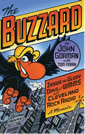
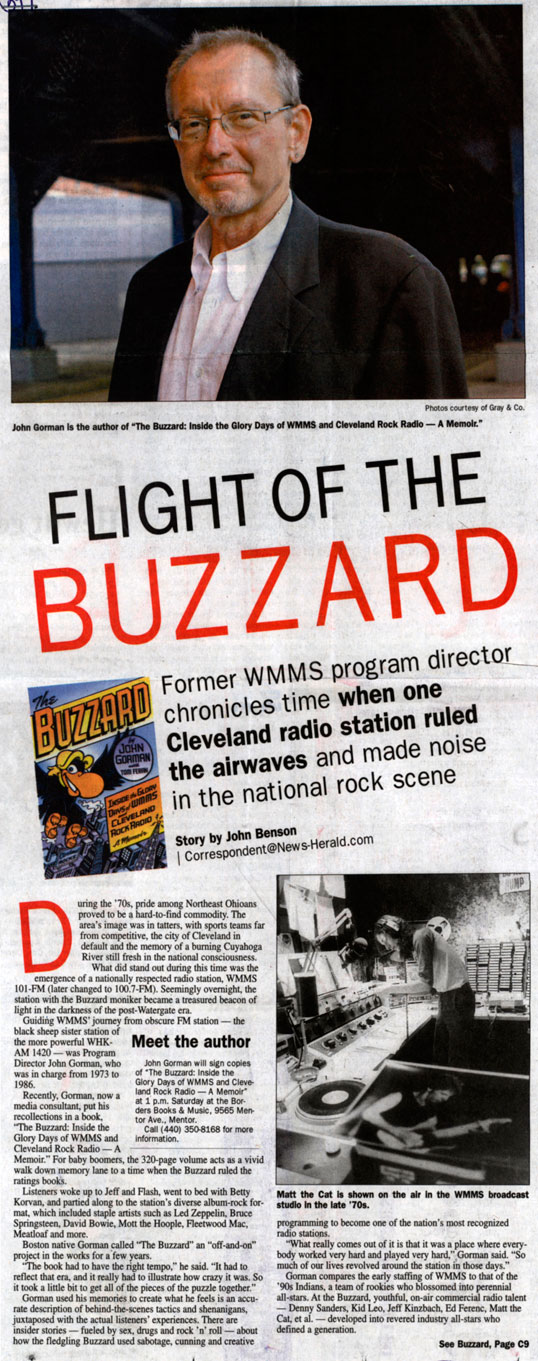
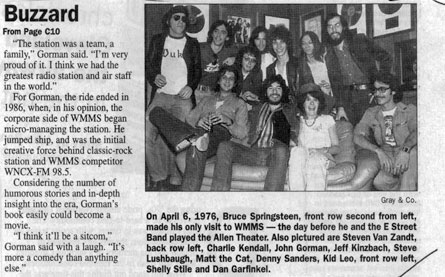
A link to three hours of MTV from 1983 at www.buzzardbook.wordpress.com

Thursday, January 31, 2008

Radio: How many people did it take to write that Clear Channel memo?

A camel is a horse designed by committee.

Question - How many people does it take to write a John Hogan memo?

Matthew Karnitschnig, a Wall Street Journal blogger, revealed that last Friday’s John Hogan “I-can’t-believe-he-wrote-this” memo was essentially penned by a committee of “experts” dispatched to San Antonio from the Boston headquarters of BainCapital.

According to Karnitschnig, “waves of panic that Clear Channel was in trouble and its $19 billion buyout in jeopardy” spread through BainCapital last week, which triggered them to “dispatch a large team of consultants and other experts to San Antonio to help run the business.”

It was their eleventh-hour attempt to salvage this degenerating deal.

We don’t know the exact number of ghost writers involved – but Karnitschnig learned that “members of the (BainCapital) team even helped draft Hogan’s memo and endorse it.”

I’ll say it again. You can’t make this stuff up.

BainCapital finally determined what’s amiss at Clear Channel. There is no valid leadership in San Antonio. It’s a company of over-privileged siblings that set up an organization of empty suits answering to the golden parachute wearing ex-Jacor frat boys.

When BainCapital opened the books it revealed the enormous sums of money and time wasted with HD Radio conversion – at $100K per station - and the other Clear Channel side projects, many since abandoned, all of which helped give the radio industry its bad name.

But let's not overestimate BainCapital. They don't know the difference between Clear Channel and Rubbermaid or Mr. Coffee.

You can’t move it to Shanghai, Chongqing or Hangzhou and have your voice-tracking done in Bangalore.

Efficiency is one thing. Amputation is another.

You can’t cut something that has nothing left to cut.

Radio has to be revalued.

If radio doesn’t find solutions instead of more problems, all of those radio-is-dead prophets of doom will be proven right.

What’s Clear Channel – thisclose to being terminal - really worth? Somewhere in teens.

Here’s the message to Clear Channel. Bite the bullet now and you’ve bought time to rebuild and recover. Sell off your properties at real multiples and keep only what you can realistically run – or, better still, just get out of the business.

If you continue to delay and deceive –you’ll be history. Remember the American automobile industry in the seventies? That’s what you’re doing to radio right now.

Clear Channel put a styptic pencil to its Wall Street bleeding yesterday. It closed at $29.16 but the downward spiral will continue. There’s no bargain here. Not even close.

Wall Street is wise to radio’s highly inflated prices.

The younger demos working the Street see through the ruse. Ask them. They’re not listening to the radio. Not because it’s obsolete – it’s just not providing their soundtrack. Nor is it the soundtrack to anyone under 40– and I’m being benevolent.

Radio’s fast becoming entertainment for those who can’t afford iPods and other options.

There’s a difference between devalued and revalued. Devalued is what Clear Channel has already done to radio.

You want the BainCapital/Thomas H. Lee deal to die. They’d run Clear Channel like Mitt Romney would run the country.

I hate to say it but it’s not even worth the comic relief to see Mark Mays and John Hogan answering to Bain Capital in the same comportment they had their managers do to them.

Wednesday, January 30, 2008

Radio: Clear Channel weather - Yesterday - 29 and change


The $17.1 billion acquisition of Harrah’s Entertainment by TPG and Apollo Globe – done.

Alliance Data Systems and Blackstone – undone. SLM, Harmon, United Rentals – un-done.

There’s no assurance of private equity deals reaching closure.

So what soured the Clear Channel buyout deal, you ask?

Where would you like to begin?
*
Cash, where is thy flow?

There’s nothing left over to cut from the operating budget. They’ve done everything but turn the oxygen off.

The competitive advantages Clear Channel touted to Bain/Lee weren’t real – not even close.

The Premiere syndicated division is over-rated. Rush, Dr. Laura, Delilah – they’re all long in the tooth. What can you say about Whoopi’s morning show other than “whoops?”

Clear Channel closed at $29.17 yesterday. And you thought Monday’s $31.42 was bad?

What’s the spread? The Bain/Lee buyout price was $39.20. Now, Clear Channel’s stock value is a sawbuck short.

These aren’t times of risk-taking – and taking on a critically problematical and devalued company like Clear Channel is an imprudent risk.

When number one son Mark Mays, announced the Bain/Lee LBO deal, he told Business Week on November 16, 2006, “ We're ecstatic (about the deal), and it's a great price for our existing shareholders. The buyers have a long-term horizon and are excited about the business and the great cash flow."

Take away the smoke and mirrors and it’s clear that Clear Channel didn’t know how to run radio nor did they hold on to people in that knew how to. It became a second tier micromanaged company.

They played the Wall Street game of stock purchases, dividends, and occasionally selling off cosmetic assets. When the well ran dry they suckered in Bain/Lee.

And what of Clear Channel’s employees and management? They made crap for cash. Their achievements were barely noticed. Clear Channel’s idea of encouragement was to not fire you.

Did you hear the buzz about what happened after that private equity conference ended in New York Yesterday? You’ll love this.

You’re Anthony J. DiNovi, co-president of Thomas H. Lee.

You’re cornered and asked about the probability of the $19.5 billion Clear Channel buyout reaching completion.

Your answer, please?

“No comment.”

Clear Channel criticized David Faber for referencing the quote on CNBC.

DiNovi told Dow Jones that no one should read anything into his “no comment” quote.

Wink, wink, nudge, nudge.

A few days earlier another Lee spokesperson, Scott Sperling, told Bloomberg News that he believed the deal would get done and remained confident the banks would honor their financing commitments.

What a difference a sawbuck makes.

Thomas H. Lee is only half of the Clear Channel deal.

What did a rep from BainCapital say yesterday when asked the same question?

The same answer: “No comment.”

Question - What are the three words that strike terror into the black hearts at the San Antonio Clear Channel headquarters?

Answer - Material adverse conditions.

One of two things will happen. The deal dies or gets reworked with the original prices slashed.

Both parties will end up calling the final outcome a "positive solution," but that'll be more from lawyer fatigue than anything else.

Either way – this deal’s heading south on a hell bound train.

Tuesday, January 29, 2008

Radio: Lost in Translation

Destination: San Antonio. We’ve turned back the clock to this past Friday, the 25th. Clear Channel Radio CEO John Hogan is tidying up the loose ends of a memo he’s about to send out to his subordinates – just in time to wreck their weekend.

This one heralds the new rules and regulations – effective immediately –for Clear Channel managers.

No one ever went broke trying to underestimate Clear Channel’s knack to screw up the entire radio industry. The proposed LBO with BainCapital and Thomas H. Lee is just the latest in a series to stop their hemorrhaging.

Though Hogan calls his memo a contingency plan it’s not in response to an unforeseen occurrence. The Mays deal with Bain/Lee was put together over a year ago. Since then the Mays clan ran out of rug to sweep their tribulations under and now Bain/Lee’s realizing how dire the deal is.

Hogan’s memo did zilch for Clear Channel stock, which plunged 7 percent since Friday. Bain/Lee did the LBO deal at $39.20. Last night – after doing over twice the average daily volume - CCU finished at $31.42. Backing out of the deal – even at a cost of $500 million – is the lesser of two evils for Bain/Lee and the banks caught up in this debacle.

Let’s consider the bright side of this unfolding disaster. It’s revealing the true valuation of radio properties. That in turn will hasten opportunities for real broadcasters to get back in the game.

The kith and kin at the Clear Channel offices in San Antonio speak in a weird and obscure dialect. They call it Mays as in maze – since its management and employees feel like rats trapped in one.

That’s the raison d'être for the memo’s translation.

From: Hogan, John
Sent: Friday, January 25, 2008 09:31
To: Radio General Managers - All; Radio Business Managers
Cc: Radio EVP's; Radio SVP's ; Radio SVPP; Radio RVP
Subject: First Quarter Contingency Plan

Good Morning,

As you are undoubtedly aware, we are generating less revenue for Q1 than we budgeted and less than what actually ran last year. At the same time, our budgeted expenses for Q1 are up 4%. While there are a number of factors contributing to our revenue shortfall the fact is we are behind on our revenue plan, up over last year on expenses, and as a result we will be well below our budgeted Q1 bcf. As responsible managers, we need to address the shortfall not only by continuing to find ways to increase our revenue but also by implementing cuts on the expense side until revenue production improves.

Translation: The kids are threatening to cut me a new one. The BainCapital/Thomas H. Lee deal is unraveling. What does that say about us if they’re willing to part with $500 million just to get us off of their books?

No one anticipated how challenging Q1 would be for us and while the plans we put in place last Fall made sense then, clearly we are operating in a different environment and thus need an adjustment to our plan.

You’ve heard the saying “from bad to worse?” That’s us.

The following Q1 expense reductions are to be implemented immediately in your market and correctly reflected to San Antonio by having your Market Controller access the Flash website under Reporting Events and complete the form titled "Q1 Contingency Plan". You will need to provide the expenses reduction amounts on the required form at the market level for the items identified below. This needs to be completed by no later than 7 pm ct today.

Hired rhymes with Fired but the latter comes first in the dictionary and we need to be first in something.

If you should have questions regarding the logistics, please contact Jeff Rice or Katie Gingrich and they will help guide you thru the process. The Q1 expense reductions are as follows:

'Q1 Expense Reductions

-all Research monies after 2/1

What we don’t know won’t hurt us.

-all Advertising and Promotion monies after 2/1

We have nothing worth advertising and promoting.

-all New Sales Hire guarantees not already implemented effective immediately (do NOT hire any additional sales people effective immediately)

We have nothing on-air worth selling.

-any New Hires budgeted but not hired effective immediately (do not hire any additional new employees)

Make do with threatening your current employees. There is no reason for us to train new employees to fear for their jobs.

-any/all discretionary monies (i.e. travel, meals and entertainment, etc) for your market. If you can save it, do so

When you take a client to lunch – have them pick up the tab.

Additionally, you are not to replace any departing personnel without specific approval from your EVPO

We can barely make payroll now - and more significantly - the Mays kids already renewed the leases on their Lear jets and limos and we have all those special interest groups payoffs…correct that… payments to deal with.

I completely understand the challenges associated with implementing the above cuts. It will make your job more difficult and have some long term affect (sic) on your overall performance. It goes without saying that leading through these reductions will be challenging. If there were another better alternative, we would not be requiring these reductions be implemented. Unfortunately, there is not another alternative.

Don’t worry about long term. We don’t.

Please contact your EVPO for any questions you have on implementing the reductions. Please recognize that your team will need strong leadership and support while implementing and operating under these expense reductions. Please help them understand the necessity of implementing these cuts and the importance of figuring out how they can operate as effectively as possible in the reduced Q1 expense scenario.

We've mismanaged this company and your employees are going to pay for it. What is there not to understand?

Again, I realize this is a challenging task but I am asking for your help, leadership, and support to implement and then work with the resulting expense plan to the best of your ability. It should go without saying that at the earliest opportunity, that is when revenues begin to stabilize and increase we can reverse the expense reductions.

Let’s face it. Revenues aren’t going to getting better. You’ll be next.

Thank you in advance for communicating the above to your teams and for your Market Controllers completing the information requests on the accompanying website. Please let me know how I can help.

I have a golden parachute and you don’t. If you try to reach me this weekend and I don’t answer – that means I forgot to take my cell phone with me on the golf cart.

John
John Hogan
Pres. & CEO

I have a job and you won’t.